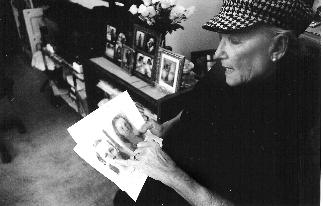
Sascha Jansen: An American POW in the
Philippines
Philippines
February 3, 2005
For those who have experienced war
firsthand, the passage of time does not
diminish the terror, the pangs of hunger, nor
the joy of being liberated. For Jean “Sascha”
Jansen, of Vacaville, the trauma she experienced
in a Japanese POW camp in the Philippines
during WWII, are as vivid as if they happened
yesterday rather than sixty years ago this month.
She was born Jean Weinzheimer, in the Philippines, to a German-Hawaiian father and a German-
Tahitian mother, who were both American citizens. They were in the Philippines, because her
grandfather, Louis Weinzheimer, owned the Canlubang sugarcane plantation. Louis, originally from
Germany, worked as a foreman at a Hawaiian sugarcane plantation owned by the Spreckel family. Mr.
Spreckel convinced Louis to buy the sugarcane plantation in Canlubang, just south of Manila, in 1919.
When Sascha’s father and her father’s brother became old enough, they went to the Philippines
to help their father. Canlubang was a prosperous operation with many employees and even its own
baseball team. “When Babe Ruth went on a world tour and visited the Philippines, our baseball team
played against him,” said Sascha. It was an Idyllic place to live …until the war started.
When the war began, all Americans were told to report to Manila at the University of Santo
Tomas. “We thought we were only going to be there for a short time because they told us to only
bring food for three days,” said Sascha recalling her years as a prisoner of war (POW). Her family was
imprisoned at Santo Tomas for over three years. “The Japanese told us they were not following the
Geneva Convention,” she added.
Sascha was only eight years old when she was first imprisoned. In addition to her young age, she
was also suffering from polio, which she contracted at the age of eighteen months old. “I had five
surgeries in San Francisco before the war,” said Sascha. “But the Japanese didn’t give me any
special treatment or pity. It got worse when I began to outgrow my special shoes and leg braces. By
the time I was liberated, I had lost all muscle tone,” she added.
“The worst part of the ordeal was being hungry every day,” lamented Sascha as she recalled the
horror. “They told us we could leave the camp to find food, which we did. We got food from
businesses and we gave them IOU’s in return.” In spite of their resourcefulness, their Japanese
captors stole the food they had acquired. “Luckily, some of our family members and friends brought
us food through the gates.”
In addition to the hunger, Sascha’s family had to endure horrible living conditions. According to
Sascha, most people lived in former classrooms, the library and the Education building. “Then it got
so crowded that they started building shanties. Our family of five lived in a ten by ten shanty,” said
Sascha. “But at least we were all together.”
Sascha’s nightmare came to an end on February 3, 1945, sixty years ago this week. “Our troops
followed the tanks as they went through the front of Santo Tomas,” said Col. Jesus Franco, a member
of the U.S. Army’s 1st Cavalry that helped liberate the prisoners. Sascha said she received a
telephone call from Col. Franco. “I killed Abiko,” is what Col. Franco said on the telephone.“Abiko was
a very cruel and mean commandant at Santo Tomas and we all hated him,” said Sascha with a look of
scorn on her face. “I saw that Abiko was ready to throw a hand grenade so I grabbed a carbine and
shot him,” said Col. Franco, who now lives at the Redwood Shores Senior complex.
From Manila, the Weinzheimer family were flown to Leyte during the middle of a typhoon. “Our
plane was the only one that didn’t turn back because of the typhoon,” recalled Sascha. While in
Tacloban, she and her family were given medical exams, food, and new clothes. “We were then put on
a troop transport ship with a full destroyer escort of twelve ships,” said Sascha.
They eventually ended up in Hawaii’s Pearl Harbor but never got off the boat. “We later found out that
four FBI agents boarded the ships and interviewed the former POW’s to gather names of traitors,”
recounted Sascha. “We left Hawaii and landed in San Francisco in April, one day before Roosevelt
died”
By this time her grandparents had bought a farm in the San Joaquin Valley. “It was like Alice in
Wonderland,” said a smiling Sascha. “They had fresh fruits and vegetables, and plenty of food to eat.
After being hungry all the time, this was paradise.” Sascha has been a resident of Vacaville for the
last six years. “Now I plan tours of historic WWII sites in the Philippines,” said Sascha two days before
leaving on another trip.
Throughout the interview, Sascha spoke Tagalog words and blurted out Filipino expressions,
especially when she got excited. She could have been someone’s Filipino grandmother telling these
stories. Sascha proves that being Filipino is in the heart. She is a true survivor and another footnote
in the history of WWII.
For those who have experienced war
firsthand, the passage of time does not
diminish the terror, the pangs of hunger, nor
the joy of being liberated. For Jean “Sascha”
Jansen, of Vacaville, the trauma she experienced
in a Japanese POW camp in the Philippines
during WWII, are as vivid as if they happened
yesterday rather than sixty years ago this month.
She was born Jean Weinzheimer, in the Philippines, to a German-Hawaiian father and a German-
Tahitian mother, who were both American citizens. They were in the Philippines, because her
grandfather, Louis Weinzheimer, owned the Canlubang sugarcane plantation. Louis, originally from
Germany, worked as a foreman at a Hawaiian sugarcane plantation owned by the Spreckel family. Mr.
Spreckel convinced Louis to buy the sugarcane plantation in Canlubang, just south of Manila, in 1919.
When Sascha’s father and her father’s brother became old enough, they went to the Philippines
to help their father. Canlubang was a prosperous operation with many employees and even its own
baseball team. “When Babe Ruth went on a world tour and visited the Philippines, our baseball team
played against him,” said Sascha. It was an Idyllic place to live …until the war started.
When the war began, all Americans were told to report to Manila at the University of Santo
Tomas. “We thought we were only going to be there for a short time because they told us to only
bring food for three days,” said Sascha recalling her years as a prisoner of war (POW). Her family was
imprisoned at Santo Tomas for over three years. “The Japanese told us they were not following the
Geneva Convention,” she added.
Sascha was only eight years old when she was first imprisoned. In addition to her young age, she
was also suffering from polio, which she contracted at the age of eighteen months old. “I had five
surgeries in San Francisco before the war,” said Sascha. “But the Japanese didn’t give me any
special treatment or pity. It got worse when I began to outgrow my special shoes and leg braces. By
the time I was liberated, I had lost all muscle tone,” she added.
“The worst part of the ordeal was being hungry every day,” lamented Sascha as she recalled the
horror. “They told us we could leave the camp to find food, which we did. We got food from
businesses and we gave them IOU’s in return.” In spite of their resourcefulness, their Japanese
captors stole the food they had acquired. “Luckily, some of our family members and friends brought
us food through the gates.”
In addition to the hunger, Sascha’s family had to endure horrible living conditions. According to
Sascha, most people lived in former classrooms, the library and the Education building. “Then it got
so crowded that they started building shanties. Our family of five lived in a ten by ten shanty,” said
Sascha. “But at least we were all together.”
Sascha’s nightmare came to an end on February 3, 1945, sixty years ago this week. “Our troops
followed the tanks as they went through the front of Santo Tomas,” said Col. Jesus Franco, a member
of the U.S. Army’s 1st Cavalry that helped liberate the prisoners. Sascha said she received a
telephone call from Col. Franco. “I killed Abiko,” is what Col. Franco said on the telephone.“Abiko was
a very cruel and mean commandant at Santo Tomas and we all hated him,” said Sascha with a look of
scorn on her face. “I saw that Abiko was ready to throw a hand grenade so I grabbed a carbine and
shot him,” said Col. Franco, who now lives at the Redwood Shores Senior complex.
From Manila, the Weinzheimer family were flown to Leyte during the middle of a typhoon. “Our
plane was the only one that didn’t turn back because of the typhoon,” recalled Sascha. While in
Tacloban, she and her family were given medical exams, food, and new clothes. “We were then put on
a troop transport ship with a full destroyer escort of twelve ships,” said Sascha.
They eventually ended up in Hawaii’s Pearl Harbor but never got off the boat. “We later found out that
four FBI agents boarded the ships and interviewed the former POW’s to gather names of traitors,”
recounted Sascha. “We left Hawaii and landed in San Francisco in April, one day before Roosevelt
died”
By this time her grandparents had bought a farm in the San Joaquin Valley. “It was like Alice in
Wonderland,” said a smiling Sascha. “They had fresh fruits and vegetables, and plenty of food to eat.
After being hungry all the time, this was paradise.” Sascha has been a resident of Vacaville for the
last six years. “Now I plan tours of historic WWII sites in the Philippines,” said Sascha two days before
leaving on another trip.
Throughout the interview, Sascha spoke Tagalog words and blurted out Filipino expressions,
especially when she got excited. She could have been someone’s Filipino grandmother telling these
stories. Sascha proves that being Filipino is in the heart. She is a true survivor and another footnote
in the history of WWII.