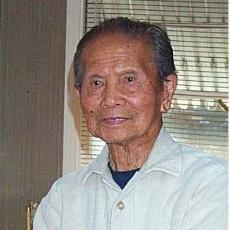
Manong Frank: The Dancing Manong
January 13, 2004
What does a one hundred year old Filipino do to keep himself
young? Go dancing every chance he gets. That’s the secret to
staying young and reaching the century mark for the oldest Filipino
old-timer in Vallejo. Manong Frank Fabillaran will celebrate his
one-hundredth birthday on January 29. Manong Frank is one of a
handful of Filipino old-timers who arrived in America in the 1920’s,
or Manongs, left in Vallejo.
Manong Frank was born in Vigan, Ilocos Sur, on January 29,
1904. His parents had a small farm where they raised corn, rice and
peanuts. “My job on the farm was to plow the fields,” said Manong
Frank. “We did not have a carabao but we had a cow to pull the
plow.” During his youthful years on the farm, Manong Frank’s favorite past time was cockfighting. “Every
Sunday I’d go to the cockfights,” smiled Manong Frank.
Manong Frank, like thousands of other adventurous young Filipinos, left the Philippines in search of a
better life. “I had a friend in Hawaii who told me I should come there to work,” said Manong Frank. These
“Pinoys” were the first Filipino overseas contract workers (OCW’s) in America. In September 1924, at the
age of twenty, he left the Philippines from Manila, looking for adventure and a better life. He sailed across
the Pacific Ocean on the President Wilson ocean liner and landed on the island of Maui.
“Maui was a nice place to live,” recalled Manong Frank. “We lived eight men to a room. We Filipinos were
paid one dollar for a ten-hour day. If we worked twenty-six days straight, we were paid for thirty days,”
added Manong Frank. Like OCW’s of today, Manong Frank and the other Pinoys sent money back to the
relatives in the Philippines. “Each of us sent at least ten dollars each month back home,” said Manong
Frank proudly.
After working in the sugar cane fields for two years, a friend of Manong Frank in California, suggested
he come to the mainland for work. In 1926, he boarded a ship to San Pedro, CA, near Los Angeles. At that
time, Pinoys arrived in the ports at San Pedro, San Francisco, Seattle, and Vancouver, British Columbia. “I
was only in Los Angeles for a couple of days before a Filipino labor contractor pick me and other Filipinos
up and brought us to Stockton,” said Manong Frank. Stockton had one of the largest Filipino populations
during the 1920’s and 1930’s. Even though he worked in the fertile fields of California’s agricultural
regions, he said that the work was easier than cutting sugarcane in Maui.
“In 1926 I was paid only twenty-five cents an hour. In 1930, because of the Great Depression, I was
only paid fifteen cents an hour,” said Manong Frank. Manong Frank picked asparagus in Stockton and
lettuce in Salinas. “To make extra money, I bought cigarettes and then resold them for profit,” stated
Manong Frank. To get from one place to another, Filipinos often pooled their money together to buy a car.
“We were eight in one car. Eddie Sixto, my cousin Jose and some others,” recalled Manong Frank. By
1933 the pay had gone higher again.
Life for the Pinoys was not all about hardship and long hours of stoop labor under the hot sun. Like
many other Pinoys, Manong Frank loved to go to boxing matches, especially when there were Filipino
boxers on the card. Some of Manong Frank’s favorite Filipino boxers were Pacific Coast bantamweight
Champion, Speedy Dado, and World Middleweight Champion, Ceferino Garcia. If a Pinoy was a boxing
champion, Pinoys like Manong Frank, felt pride in the accomplishments of their fellow Filipinos. Manong
Frank also did a little boxing, but just for fun and not in the ring.
Manong Frank was also a ladies man. “I met my first wife at a pool hall in Sacramento where she
worked as a ball girl. She was only fifteen years old at the time,” said Manong Frank. “Margie was a good
looking Mexican girl. Her parents didn’t mind when we got married in 1931, six months after they met.”
Together they had two children, Rosita and Mitzy. However, by 1941, Manong Frank left Margie, but
married her sister Sadie. With Sadie, they had one son, Freddie. According to Freddie, “My dad raised
twelve of us kids, including the children Margie had with her next marriage.”
In 1940, Manong Frank and his family moved to Vallejo from Clarksburg, in the Delta. He joined the
legions of Filipinos already working at Mare Island such as my dad and uncles. “My job was to sandblast
the boats,” recounted Manong Frank. He and his family lived in the Carquinez Heights government housing
in South Vallejo, which was set up for the Mare Island workers. Unfortunately, after the war, he was laid off
from Mare Island, but found another job at Bud’s Spuds, a potato processing plant, as a potato peeler. In
1954 he bought a house in South Vallejo on Pine Street, where he still lives today.
If you were to look up the definition of spunky, Manong Frank’s picture would be there. By 1959
Manong Frank had divorced his second wife and married for the third time to Marcy Rabon. He met her on
November 8, 159 and married her three weeks later. Together they had two children, Frances and David.
Also keeping him going was his love of fighting cocks, which he raised in his Pine Street backyard. “He also
used to raise them at Carquinez Heights with my uncle. I remember because I used to be afraid of them,”
said his son Freddie, an allegation that Manong Frank denies. Nonetheless, the police raided his house in
1974 and took away all his fighting cocks. “I know it was a white neighbor who complained to the police,”
said an angry Manong Frank.
Manong Frank credits his long life to his love of dancing. “I go dancing at the Moose Lodge every
Monday and at the Fairfield Senior Center,” said Manong Frank smiling. “When I dance, I feel happy, I feel
good. All the women want to dance with me.” Sometimes his Filipina dance partners question him about his
dancing skills because of his age. “Filipinas are not too interested in me because they think I’m too old, but
the white ladies are more friendly,” laughed Manong Frank.
If a long life is measured by how much fun a person has in life, Manong Frank sets a perfect example.
Even today, he is has that mischievous smile when recalling his long life. To look at him, you would think
he is only in his late sixties or early seventies. “Only your dad and I are the only old timers who are still
active,” remarked Manong Frank, referring to my dad who turns ninety-eight this summer. When asked
how long he wants to live, Manong Frank answered, “As long as I could dance, I feel young. I don’t want to
get too old and ugly either.”
What does a one hundred year old Filipino do to keep himself
young? Go dancing every chance he gets. That’s the secret to
staying young and reaching the century mark for the oldest Filipino
old-timer in Vallejo. Manong Frank Fabillaran will celebrate his
one-hundredth birthday on January 29. Manong Frank is one of a
handful of Filipino old-timers who arrived in America in the 1920’s,
or Manongs, left in Vallejo.
Manong Frank was born in Vigan, Ilocos Sur, on January 29,
1904. His parents had a small farm where they raised corn, rice and
peanuts. “My job on the farm was to plow the fields,” said Manong
Frank. “We did not have a carabao but we had a cow to pull the
plow.” During his youthful years on the farm, Manong Frank’s favorite past time was cockfighting. “Every
Sunday I’d go to the cockfights,” smiled Manong Frank.
Manong Frank, like thousands of other adventurous young Filipinos, left the Philippines in search of a
better life. “I had a friend in Hawaii who told me I should come there to work,” said Manong Frank. These
“Pinoys” were the first Filipino overseas contract workers (OCW’s) in America. In September 1924, at the
age of twenty, he left the Philippines from Manila, looking for adventure and a better life. He sailed across
the Pacific Ocean on the President Wilson ocean liner and landed on the island of Maui.
“Maui was a nice place to live,” recalled Manong Frank. “We lived eight men to a room. We Filipinos were
paid one dollar for a ten-hour day. If we worked twenty-six days straight, we were paid for thirty days,”
added Manong Frank. Like OCW’s of today, Manong Frank and the other Pinoys sent money back to the
relatives in the Philippines. “Each of us sent at least ten dollars each month back home,” said Manong
Frank proudly.
After working in the sugar cane fields for two years, a friend of Manong Frank in California, suggested
he come to the mainland for work. In 1926, he boarded a ship to San Pedro, CA, near Los Angeles. At that
time, Pinoys arrived in the ports at San Pedro, San Francisco, Seattle, and Vancouver, British Columbia. “I
was only in Los Angeles for a couple of days before a Filipino labor contractor pick me and other Filipinos
up and brought us to Stockton,” said Manong Frank. Stockton had one of the largest Filipino populations
during the 1920’s and 1930’s. Even though he worked in the fertile fields of California’s agricultural
regions, he said that the work was easier than cutting sugarcane in Maui.
“In 1926 I was paid only twenty-five cents an hour. In 1930, because of the Great Depression, I was
only paid fifteen cents an hour,” said Manong Frank. Manong Frank picked asparagus in Stockton and
lettuce in Salinas. “To make extra money, I bought cigarettes and then resold them for profit,” stated
Manong Frank. To get from one place to another, Filipinos often pooled their money together to buy a car.
“We were eight in one car. Eddie Sixto, my cousin Jose and some others,” recalled Manong Frank. By
1933 the pay had gone higher again.
Life for the Pinoys was not all about hardship and long hours of stoop labor under the hot sun. Like
many other Pinoys, Manong Frank loved to go to boxing matches, especially when there were Filipino
boxers on the card. Some of Manong Frank’s favorite Filipino boxers were Pacific Coast bantamweight
Champion, Speedy Dado, and World Middleweight Champion, Ceferino Garcia. If a Pinoy was a boxing
champion, Pinoys like Manong Frank, felt pride in the accomplishments of their fellow Filipinos. Manong
Frank also did a little boxing, but just for fun and not in the ring.
Manong Frank was also a ladies man. “I met my first wife at a pool hall in Sacramento where she
worked as a ball girl. She was only fifteen years old at the time,” said Manong Frank. “Margie was a good
looking Mexican girl. Her parents didn’t mind when we got married in 1931, six months after they met.”
Together they had two children, Rosita and Mitzy. However, by 1941, Manong Frank left Margie, but
married her sister Sadie. With Sadie, they had one son, Freddie. According to Freddie, “My dad raised
twelve of us kids, including the children Margie had with her next marriage.”
In 1940, Manong Frank and his family moved to Vallejo from Clarksburg, in the Delta. He joined the
legions of Filipinos already working at Mare Island such as my dad and uncles. “My job was to sandblast
the boats,” recounted Manong Frank. He and his family lived in the Carquinez Heights government housing
in South Vallejo, which was set up for the Mare Island workers. Unfortunately, after the war, he was laid off
from Mare Island, but found another job at Bud’s Spuds, a potato processing plant, as a potato peeler. In
1954 he bought a house in South Vallejo on Pine Street, where he still lives today.
If you were to look up the definition of spunky, Manong Frank’s picture would be there. By 1959
Manong Frank had divorced his second wife and married for the third time to Marcy Rabon. He met her on
November 8, 159 and married her three weeks later. Together they had two children, Frances and David.
Also keeping him going was his love of fighting cocks, which he raised in his Pine Street backyard. “He also
used to raise them at Carquinez Heights with my uncle. I remember because I used to be afraid of them,”
said his son Freddie, an allegation that Manong Frank denies. Nonetheless, the police raided his house in
1974 and took away all his fighting cocks. “I know it was a white neighbor who complained to the police,”
said an angry Manong Frank.
Manong Frank credits his long life to his love of dancing. “I go dancing at the Moose Lodge every
Monday and at the Fairfield Senior Center,” said Manong Frank smiling. “When I dance, I feel happy, I feel
good. All the women want to dance with me.” Sometimes his Filipina dance partners question him about his
dancing skills because of his age. “Filipinas are not too interested in me because they think I’m too old, but
the white ladies are more friendly,” laughed Manong Frank.
If a long life is measured by how much fun a person has in life, Manong Frank sets a perfect example.
Even today, he is has that mischievous smile when recalling his long life. To look at him, you would think
he is only in his late sixties or early seventies. “Only your dad and I are the only old timers who are still
active,” remarked Manong Frank, referring to my dad who turns ninety-eight this summer. When asked
how long he wants to live, Manong Frank answered, “As long as I could dance, I feel young. I don’t want to
get too old and ugly either.”